LEGO Modular Buildings: A Collector's Guide to Starting (and Finishing) the Street
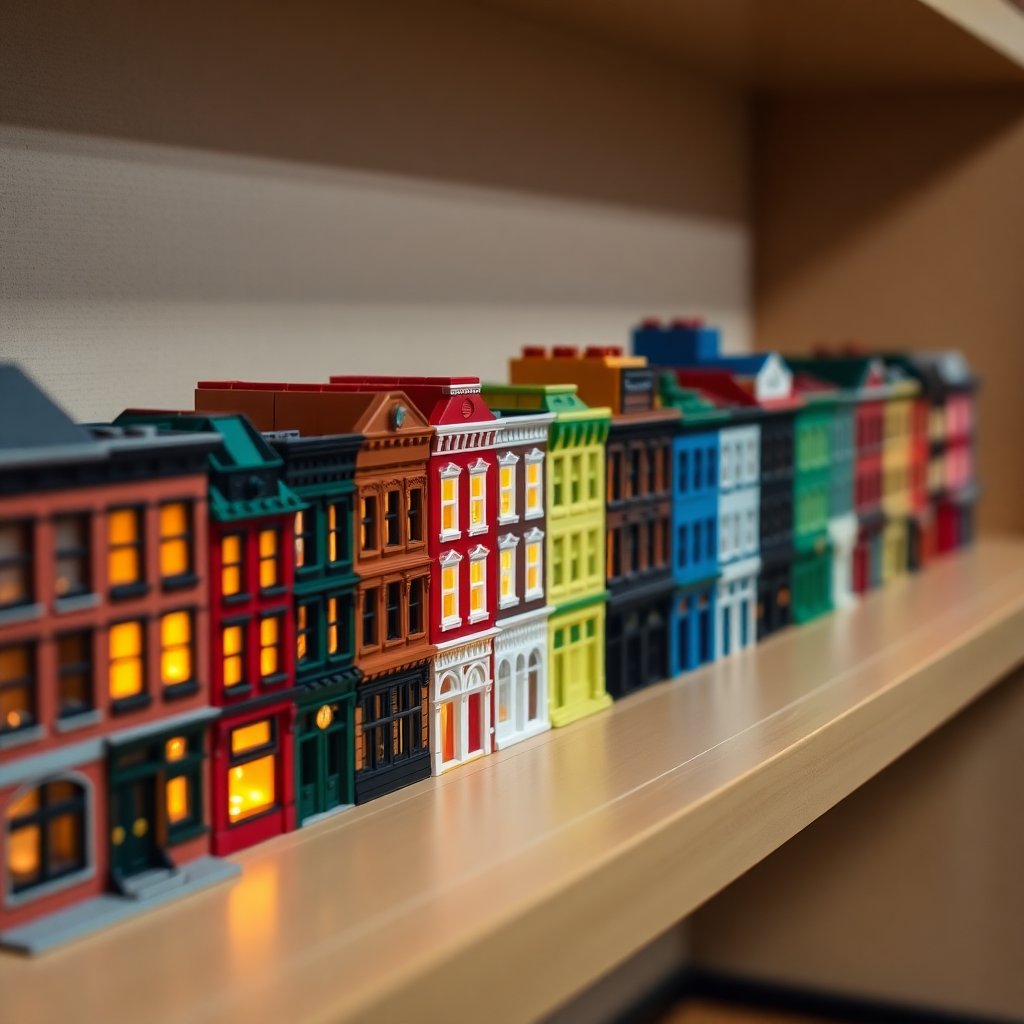
Few corners of the LEGO hobby inspire the same quiet obsession as the modular buildings. Ask a longtime adult fan what sits on the top shelf and there is a good chance the answer is a row of three-story townhouses, a corner cafe, and a bookshop — each one a self-contained diorama that locks to its neighbor to form a continuous city street. The modulars are not the biggest sets LEGO makes, nor the flashiest. Their appeal is slower and deeper: architectural detail, interior rooms you can actually furnish, and a shared footprint that turns a shelf into a block of a living town. This guide explains what the modular line is, why it holds its value, and exactly how to start collecting without overcommitting on day one.
What "Modular Building" Actually Means
The term describes a specific design standard, not just any building-shaped set. A true modular is built on a 32-by-32-stud baseplate, constructed in detachable floors, and finished with a facade that connects to the building beside it using a system of Technic pins along the sidewalk edge. Lift the roof off and the top floor comes with it; lift that and you reach a fully decorated interior. That stackable, openable construction is the whole point — it is what separates a modular from a sealed display model.
The line launched in 2007 with Cafe Corner and has added roughly one new building a year since, almost always released in January. Each set is designed so its sidewalk and road height line up with every other modular ever made, which means a townhouse from 2012 snaps cleanly against a hotel from 2024. That forward-and-backward compatibility is rare in any toy line, and it is the single biggest reason collectors treat the modulars as one long project rather than a shelf of unrelated boxes.
Most current modulars land in the 2,500-to-4,000-piece range and carry a price in the rough neighborhood of 170 to 250 dollars. They are aimed squarely at adult builders — the box art even carries the "18 plus" marking — and the build itself rewards that audience with advanced techniques, sideways building, and interiors dense with small details. If you want to browse the active lineup and footprint standards, the official LEGO Icons theme page is the authoritative place to confirm what is currently in production before you buy. You can also compare the current retail range directly by searching LEGO modular buildings on Amazon.
Why Collectors Chase Them
Three forces drive the modular obsession, and understanding them helps you decide how seriously to collect.
The display payoff is enormous. A single modular is a handsome object, but a row of four or five reads as a genuine streetscape — awnings, street lamps, balconies, shop signage, and interiors glimpsed through the windows. The shared baseplate standard means the effect compounds. Each new set does not just add a building; it extends the city.
They hold value unusually well. Modulars are among the most reliable sets in the secondary market. When a building retires — and each one eventually does — sealed copies tend to climb steadily rather than spike and crash. That is a function of genuine demand from a large adult fan base rather than speculative hype, which makes the trend more durable. We dug into the mechanics of this in our guide to which LEGO sets go up in value, and modulars sit near the top of the "buy it before it retires" conversation for good reason. None of this is a guarantee, though. Treat appreciation as a pleasant side effect, not a reason to mortgage the house.
The build is the hobby. Many collectors buy modulars specifically because the experience is long, absorbing, and technique-rich. A 3,000-piece modular is a multi-evening project with few repetitive stretches, which is exactly what an adult builder tends to want after a week of work.
Which Modular to Buy First
Resist the urge to start with the biggest or most expensive building. Your first modular should be one that is currently in production, so you are not forced into the inflated secondary market before you even know you like the line.
Pick a current-release set, not a retired grail. Retired modulars command real premiums, and overpaying for a sealed 2010 set as your entry point is a mistake. Start with whatever LEGO is actively selling this year. You will get the latest design refinements, a fair retail price, and the option to buy a second copy later. Browse what is shipping now with a search for LEGO Icons modular buildings on Amazon and cross-check availability against the official theme page.
Favor a corner building if you want visual impact. Corner modulars — the ones with a diagonal or curved facade meeting two streets — tend to be the showpieces of any street because they anchor the ends of a row. If you only ever own one, a corner set gives you the most drama per shelf inch.
Match the theme to your taste, not to a checklist. The line spans cozy bookshops, grand hotels, a police station, a bank, a cinema, a department store, and more. Because every building is compatible, there is no "correct" order. Buy the one whose facade you would be happy to look at every day, because you will be looking at it for a long time.
For a true beginner who is not sure the 2,500-plus piece commitment is right, there is a sensible on-ramp: LEGO periodically releases smaller "corner garage" and townhouse-scale sets in the same architectural spirit at a lower piece count. They teach the techniques without the full price tag.
Budgeting a Full Street
Here is the honest math. A complete, current-era street of five to six modulars represents well over a thousand dollars at retail, built over several years. Nobody sensible buys them all at once. The collectors who finish a street almost universally follow the same rhythm: one new modular per year, bought at or near release.
That cadence matters for a practical reason. Because new modulars appear in January and old ones retire on an unpredictable schedule, buying each building while it is in production is both the cheapest route and the one that avoids secondary-market premiums entirely. If you wait, you risk paying double later. If you buy one a year, the hobby costs roughly the price of a nice dinner out each month — spread across a build that lasts weeks.
A few ways to soften the cost:
- Watch for retailer sales rather than discounts on LEGO's own store. Modulars rarely go on sale directly, but third-party retailers occasionally discount current sets.
- Buy the display and lighting gear gradually. You do not need to kit out the whole street at once.
- Resist buying duplicates "as an investment" until you have finished the street you actually want to look at. The display is the real return.
Displaying a Growing Street
A modular street lives or dies on presentation, and the good news is that the shared baseplate standard does most of the work for you. Line the buildings edge to edge and the sidewalks and roads align into one continuous block.
Give them depth and light. Modulars are dense with interior detail that is wasted in a dim room. A set of warm LED strips tucked inside each building transforms the street after dark, lighting up tiny bookshop shelves and hotel lobbies. We walk through the wiring and placement in our full guide to lighting a LEGO display, and modulars are the single best payoff for the effort. A flexible LED light kit for LEGO sets on Amazon is the usual starting point.
Protect the investment behind glass. Dust is the enemy of any open-interior build, and modulars collect it fast through their windows and open roofs. A deep display cabinet keeps the street clean and keeps curious hands off the fragile facades. If you are planning shelving around a collection, our broader walkthrough on how to display a LEGO collection covers depth, lighting, and dust control in one place. When you are ready to shop enclosures, searching for a LEGO display case cabinet on Amazon will surface options sized for a multi-building row.
Plan the shelf depth before you buy the furniture. A 32-by-32-stud baseplate is roughly ten inches deep, and most modulars rise taller than their footprint. A standard bookshelf is often too shallow and too short between shelves. Measure first; a street that does not fit its shelf is a slow, expensive mistake.
A Realistic First-Year Plan
If you are starting fresh, here is a plan that keeps the hobby fun and the spending honest:
- Buy one current-release modular — ideally a corner building for maximum impact.
- Build it over a few relaxed evenings. Do not rush; the build is half the value.
- Add a single LED kit to see the interior come alive before you commit to lighting the whole street.
- Decide, after living with it for a month, whether this is your line. If it is, pencil in one new building next January and let the street grow at its natural pace.
The collectors with the most satisfying streets are rarely the ones who bought fastest. They are the ones who bought steadily, lit each building well, and gave themselves years to enjoy the project rather than treating it as a race to a finished shelf.
The Bottom Line
Modular buildings are the closest the LEGO hobby comes to a lifelong project you can display in your living room. They are compatible across two decades of releases, they reward patient building, they tend to hold value when they retire, and a complete street is one of the most impressive things an adult fan can put on a shelf. Start with one current set, light it well, protect it from dust, and add a building a year. That is the whole strategy, and it is a genuinely enjoyable one.
Disclosure: The Brick Slayer participates in the Amazon Associates program and may earn a commission from qualifying purchases made through links on this page, at no extra cost to you. LEGO is a trademark of the LEGO Group, which does not sponsor or endorse this site. Prices and availability change frequently — confirm current details before purchasing.
The Brick Slayer is an Amazon Associate and earns from qualifying purchases. This article contains affiliate links; if you buy through them we may earn a small commission at no additional cost to you.
Keep leveling up
More From the Workshop
Set reviews, release dates, and the gear builders trust.