Sorting Used LEGO Bricks: Complete Rebuild Guide for AFOLs
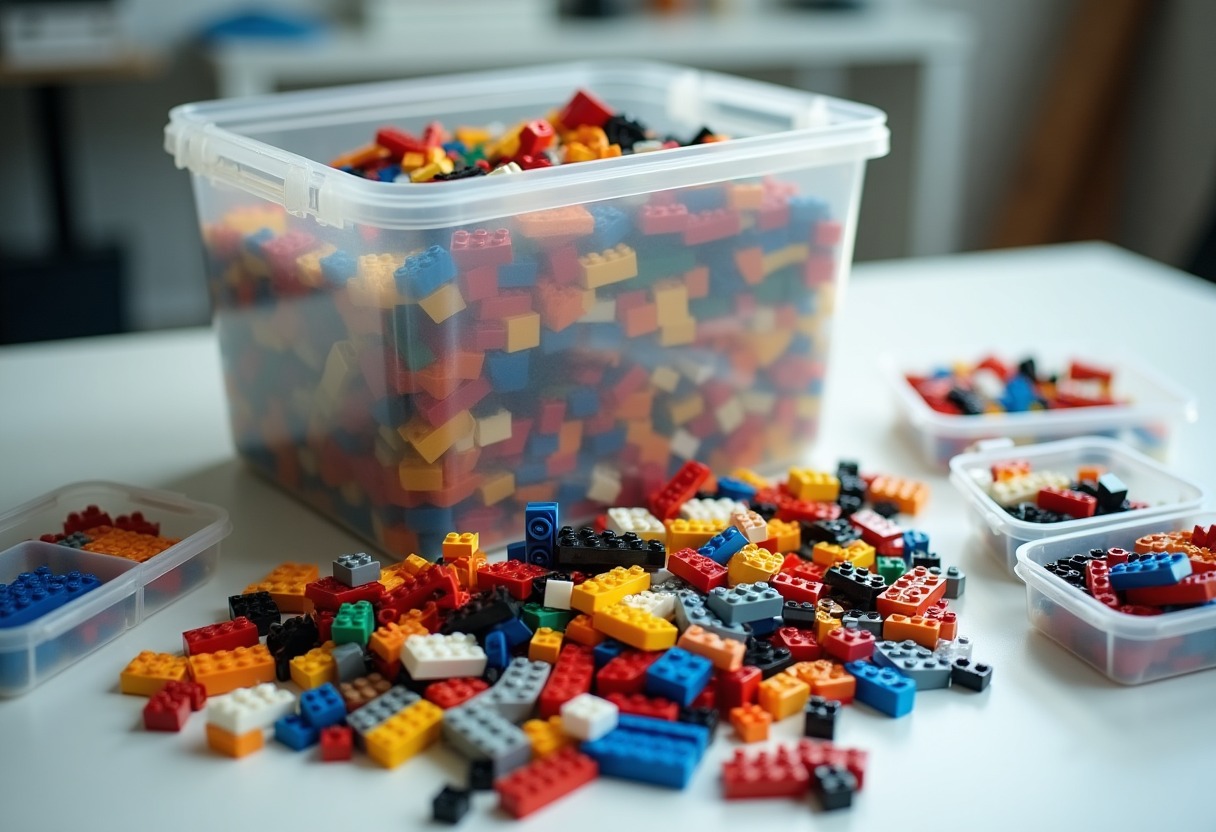
You just bought a 50-pound bin of mixed LEGO from an estate sale and now you're staring at chaos. That vintage Castle tower is in there somewhere, along with parts from at least twelve other sets you can't identify, three pounds of random plates, and what appears to be cookie crumbs from 1998.
Why Proper Sorting Saves Hundreds of Hours
Used LEGO lots represent some of the best value in the brick market — prices per pound run 60-70% below retail when buying bulk. But that value only materializes if you can actually rebuild something useful. According to BrickLink's market data, complete used sets sell for 40-60% of their new retail price, while parts lots sell by weight. The difference between those two outcomes is your sorting system.
Most AFOLs who abandon used lot purchases do so during the sorting phase. They underestimate the time commitment (sorting a 30-pound lot thoroughly takes 15-20 hours) or they use inefficient methods that turn rebuilding into archaeology. The sorting approach you choose in the first hour determines whether this bin becomes a display-worthy rebuild or permanent basement clutter.
Initial Assessment and Cleaning
Open the lot and pull out instruction manuals first — they're your roadmap. Check for set numbers, inventory pages, or even partial manuals. If you find a manual for set 6086, you now have a target to sort toward rather than drowning in random bricks.
Dump everything onto a clean sheet or large sorting tray. Before touching individual pieces, look for obvious set indicators: unique printed pieces, large specialty parts like vehicle chassis or building facades, minifigures, and baseplates. Pull these into separate piles immediately. A single printed 2x4 tile can identify an entire set when cross-referenced on Brickset.
Clean before sorting — sorting dirty bricks wastes time twice. For our complete washing protocol, see How To Clean Lego Sets, but the quick version for bulk lots: remove batteries from any electronic pieces, separate fabric and paper elements, then wash the rest in mesh laundry bags using warm water and mild dish soap. Air dry completely on towels before sorting. A → Shop mini portable vacuum on Amazon handles dust and debris between deep cleans.
The Four-Phase Sorting System
Phase 1: Broad Categories (First Pass)
Start with seven containers labeled: Plates, Bricks, Technic/Specialized, Slopes, Minifig Parts, Transparent, and Miscellaneous. Sorting by general type first establishes order. This pass takes about 2-3 hours for a 30-pound lot and immediately reveals what you're working with.
→ Shop plastic storage drawer organizers on Amazon work better than bins for this phase — you need visibility and easy access. Stackable drawer units with 10-20 compartments let you refine categories without taking over the entire dining table.
Phase 2: Color Separation Within Types
Now subdivide each broad category by color. Your "Plates" container splits into separate compartments for black plates, white plates, red plates, and so on. Color sorting is non-negotiable for set identification — that dark bluish gray 1x4 plate looks identical to a dark gray one until they're side by side.
Use → Shop parts sorting trays on Amazon with 20-30 small compartments for this phase. The automotive parts organizers with removable dividers give you flexibility as quantities vary.
Phase 3: Size and Shape Refinement
Within each color group, sort by size and shape. All your red 2x4 bricks in one spot, red 2x2 bricks in another. This granular organization is what makes rebuilding possible. When the instruction manual calls for a red 2x4 brick, you reach for one specific compartment instead of digging through pounds of red pieces.
This is where a → Shop magnifying lamp desk on Amazon pays off. Small parts like 1x1 plates, cheese slopes, and clips become indistinguishable in poor lighting. The magnification also helps spot the tiny print on pieces that identifies rare variants worth separating.
Phase 4: Special Elements and Identification
Pull aside anything unusual: printed tiles, stickers still attached, rare colors, damaged pieces, and non-LEGO elements that snuck into the lot. These pieces often unlock set identification. Run printed elements through Brickset's part search function to find which sets used them.
For precise measurements when identifying mystery parts, a → Shop digital caliper measuring tool on Amazon removes guesswork. LEGO dimensions are standardized to 0.1mm tolerances — a genuine 1x2 plate measures exactly 15.8mm x 7.8mm.
Sorting Method Comparison
| Method | Speed | Rebuild Success Rate | Best For | Storage Space | |--------|-------|---------------------|----------|---------------| | By Color Only | Fast (3-5 hrs/30lbs) | 40-50% | Display builders using pieces creatively, not rebuilding specific sets | Minimal - 8-12 containers | | By Type Then Color | Medium (8-12 hrs/30lbs) | 70-80% | Most AFOLs balancing rebuild capability with time investment | Moderate - 30-50 containers | | By Type, Color, and Size | Slow (15-20 hrs/30lbs) | 90-95% | Serious collectors rebuilding vintage sets, investors verifying completeness | Extensive - 100+ compartments | | Hybrid: Common Types + Unique Pieces | Medium-Fast (6-10 hrs/30lbs) | 75-85% | Large lots with multiple identifiable sets mixed together | Moderate - 40-60 containers |
The hybrid method works well for lots where you've identified 3-5 specific sets from manuals or printed pieces. Sort those set-specific pieces into dedicated bins while using broader categories for the remaining bulk. This targets your effort where it matters most.
Product Recommendations for Lot Sorting
Sorting Hardware
The Akro-Mils 10124 storage cabinet with 24 drawers hits the sweet spot for most AFOLs — enough compartments to sort meaningfully without requiring a spare room. For larger lots, the 64-drawer version scales up. Clear drawer fronts eliminate constant opening and closing during rebuilds.
Work Surface Solutions
Large parts sorting trays with 1-2 inch walls contain the chaos during active sorting sessions. Look for white or light gray backgrounds — they provide contrast for identifying dark pieces and don't compete visually with brick colors. The 24x36 inch size works on most dining tables without overwhelming the space.
Identification Tools
A magnifying lamp with 3x-5x magnification and adjustable arm positions your light source exactly where needed. The cheap clip-on magnifiers work, but a weighted base model won't tip over when you bump it at 1am while hunting for that one dark tan 1x2 modified plate with handle.
Digital calipers measure studs, hole diameters, and overall dimensions when identifying pieces that look similar but aren't. Worth the $15 when you're trying to determine if that tan slope is the official LEGO version or a MegaBloks clone that somehow infiltrated the lot.
For permanent storage of sorted pieces, refer to How To Organize Lego Bricks for long-term systems that prevent re-mixing.
Advanced Identification Techniques Most Guides Skip
The Printed Piece Backdoor
Every printed LEGO piece has a limited production run tied to specific sets. A single printed tile can narrow your mystery lot to 2-3 possible sets. Search the print pattern on BrickLink under "Printed Items" or use image search on Brickset. Once you identify one set in the lot, cross-reference other unique pieces against that set's inventory to confirm.
Baseplate Dating
LEGO baseplate undersides carry production information. Green baseplates from the 1970s-80s have different stud patterns than modern versions. Classic gray baseplates from 1992-2003 help date entire lots since they appear in sets from that specific era. This temporal information focuses your set identification research.
Brick Chemistry Changes
LEGO changed ABS plastic formulations multiple times. Pre-2004 dark red and brown pieces are more brittle and slightly different in hue than modern equivalents. Light bluish gray replaced the original gray in 2003-2004. These transitions create natural chronological boundaries — if your lot contains old gray but no light bluish gray, you're working with pre-2004 sets.
The Technic Pin Test
Technic pins and axles reveal lot history. Smooth black friction pins appeared in 1989. Blue pins indicating frictionless connection came later. The presence or absence of specific Technic elements dates sets more accurately than general bricks.
Inventory Reconciliation Strategy
Once you've identified likely sets, download their inventory lists from BrickLink. Create a simple spreadsheet with piece counts. As you sort, check off pieces against inventories. This reveals which sets are complete, which are 80% complete (worth finishing with BrickLink orders), and which are hopeless fragments. Don't waste time trying to complete a set that's only 30% present.
For sets worth completing and displaying afterward, check How To Display Lego Collection for presentation strategies that maximize visual impact.
FAQ
How long does sorting a 30-pound LEGO lot actually take?
Expect 15-20 hours for thorough type-color-size sorting that enables rebuilding. Quick color-only sorting takes 3-5 hours but reduces rebuild success significantly. Most AFOLs work in 2-3 hour sessions across multiple days rather than marathon sorting sessions — hand fatigue and decision fatigue both degrade accuracy after three hours.
Should I sort pieces I don't recognize or might be non-LEGO?
Create a "questionable" container immediately. LEGO clone brands from the 1990s-2000s (Tyco, MegaBloks early sets) mixed into lots can cause fit issues during rebuilds. Genuine LEGO bricks have "LEGO" molded somewhere on the piece — check studs, undersides, and interior ribs with magnification. When in doubt, the clutch power test works: LEGO bricks hold together firmly but separate cleanly; clones tend toward too loose or too tight.
What percentage of used lots actually contain complete sets?
Based on AFOL community data from rebuilding hundreds of lots, roughly 20-30% of bulk purchases contain at least one rebuildable set (85%+ complete). Estate sale lots from single collectors have higher completion rates than garage sale mixtures. Lots with original instruction manuals jump to 60-70% completion probability. Price per pound under $8-10 typically means heavier mixing and lower completion chances.
How do I identify pieces when BrickLink shows 40 similar variants?
Measure precisely with calipers, count studs carefully, and photograph the piece from multiple angles against a white background. Upload images to LEGO forums or the r/lego subreddit identification threads — the community identifies obscure pieces fast. Check production years of candidate pieces against the era your lot represents. A piece that didn't exist until 2015 won't appear in your lot of exclusively 1990s space sets.
Is it worth sorting used LEGO lots or should I just buy new sets?
The math depends on your time value and goals. Used lots cost $8-12 per pound; new sets cost roughly $40-50 per pound of bricks. If you value your time at $20/hour and spend 18 hours sorting a 30-pound lot that yields 20 pounds of usable sorted bricks, you're at $18/hour labor cost for $35/pound in value — marginal savings but you gain unique vintage pieces. For collectors hunting discontinued sets or rare colors, used lots are the only source. For builders who want specific new sets immediately, buy retail or check Lego 2026 New Releases By Theme for current options.
A sorted, identified lot transforms from a bin of plastic into a library of building potential — one where you actually know which book you're reaching for.
Some links on this page are affiliate links. We may earn a small commission if you purchase through them, at no extra cost to you.
The Brick Slayer is an Amazon Associate and earns from qualifying purchases. This article contains affiliate links; if you buy through them we may earn a small commission at no additional cost to you.
Keep leveling up
More From the Workshop
Set reviews, release dates, and the gear builders trust.