How to Organize LEGO Bricks: Sort by Color, Size, or Type
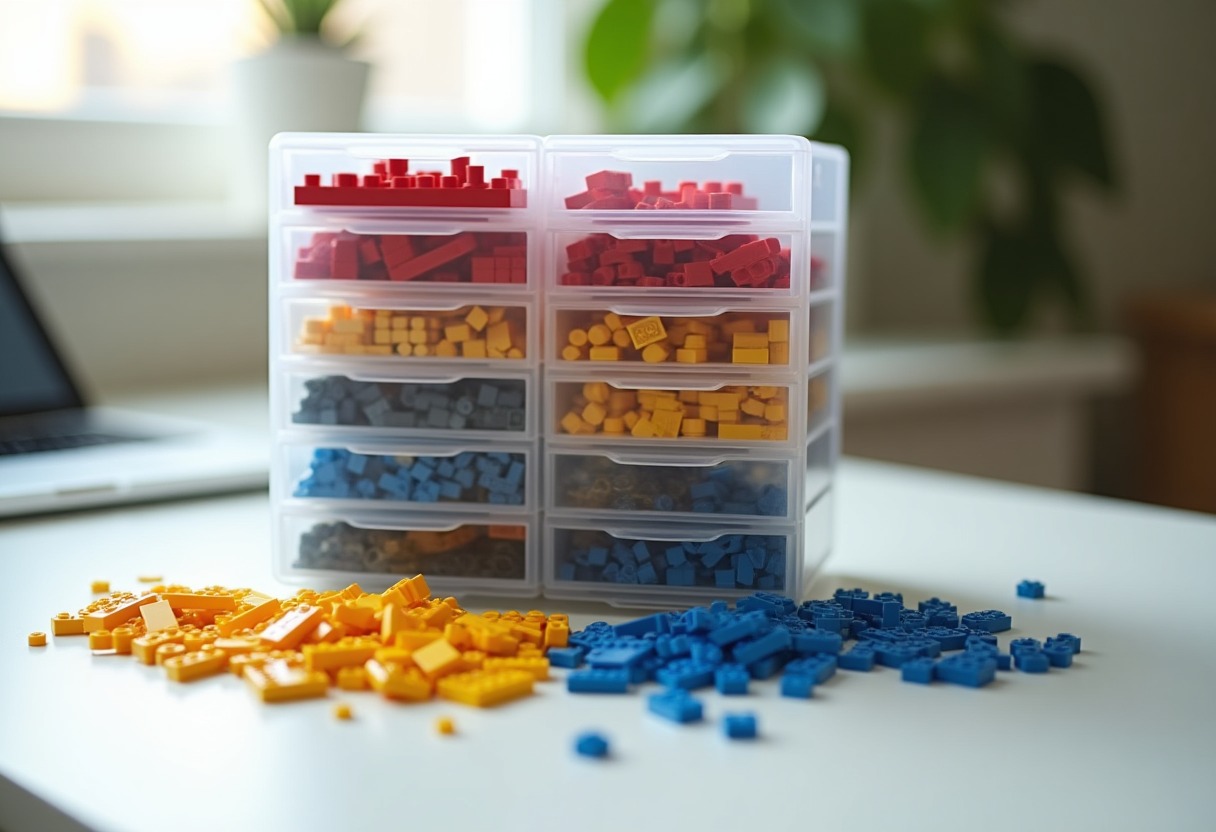
The moment your LEGO collection outgrows a single bin, you face a choice that affects every build session for years: organize by color, by part type, or by size. Most builders get this wrong the first time, then spend weekends reorganizing when their system breaks down mid-build.
Why Your Organization Method Determines Build Speed
The average AFOL wastes 15-30 minutes per build session hunting for specific parts in poorly organized storage. That's 2-5 hours monthly spent searching instead of building. Your sorting method isn't about aesthetics—it's about retrieval efficiency when you need a specific 1x2 plate in dark bluish gray at step 247.
LEGO produces over 3,700 different elements across dozens of colors. Professional builders and serious collectors universally organize by part type first, then subdivide by color for frequently-used categories. Color sorting looks appealing in photos but fails catastrophically when you need specific technical pieces during complex builds. According to BrickLink's active seller community, type-based systems reduce average part location time by 60-70% compared to color-only sorting.
The exception: if you primarily build MOCs (My Own Creations) focusing on color blocking and artistic display, a color-first system makes sense for your workflow. For everyone else—especially those following instructions from Best Lego Sets For Adults 2026 or tackling UCS sets—part type organization wins consistently.
The Three Primary Sorting Methods Compared
Sort by Part Type groups identical elements together regardless of color. All 1x2 bricks in one container, all 1x4 plates in another, all Technic pins together. This method mirrors how LEGO designs instruction manuals—step callouts reference part shapes first, colors second.
Sort by Color groups all parts of the same color together. All red bricks (regardless of size or type) in one bin, all blue in another. This appeals to builders who work on monochromatic sections or color-coordinated MOCs where shade consistency matters more than part variety.
Sort by Size separates small parts (plates, tiles, 1x1 elements) from medium parts (standard bricks) and large parts (baseplates, panels, vehicle bodies). Often combined with color or type sorting as a secondary filter.
Here's how these methods perform across real building scenarios:
| Sorting Method | Instruction Following | MOC Building | Storage Density | Setup Time | |----------------|----------------------|--------------|-----------------|------------| | Part Type | Excellent — finds specific pieces in 5-10 seconds | Good — requires searching multiple type bins per color need | High — identical parts stack efficiently | 15-25 hours initial (for 50k+ pieces) | | Color | Poor — hunting through mixed types wastes 30-60 seconds per part | Excellent — grab entire color bins for themed sections | Medium — mixed shapes don't stack optimally | 8-12 hours initial | | Size | Fair — narrows search but still mixing types and colors | Fair — helps with detail work vs. structural building | Low — broad categories need more containers | 5-8 hours initial | | Hybrid (Type + Color) | Excellent — precision retrieval under 10 seconds | Excellent — best of both systems | Variable — requires most containers | 25-40 hours initial |
The hybrid approach—organizing common parts by type, then subdividing high-volume categories by color—delivers the best results for builders who do both instruction-based builds and original creations. Allocate type-sorted bins for technical parts (Technic, hinges, clips, slopes) and color subdivisions for basic bricks and plates.
Setting Up Your Part Type Organization System
Start with the → Shop plastic storage drawer organizers on Amazon that offer 20-40 small drawers. These units handle your most-used categories while keeping everything visible and accessible.
Tier 1: Separate these categories immediately (even with 5,000 pieces):
- Basic bricks (1xN, 2xN in all sizes)
- Plates (1xN, 2xN, larger squares)
- Slopes (standard, inverted, curved)
- Tiles and flat pieces
- Specialty parts (Technic, hinges, clips, SNOT brackets)
- Minifigure parts and accessories
Tier 2: Subdivide when categories exceed 200 pieces:
- Basic bricks by size (1x2, 1x4, 2x2, 2x4, etc.)
- Plates by size
- Slopes by angle (30°, 45°, curved)
- Tiles by size
- Technic by connector type (pins, axles, gears, liftarms)
Tier 3: Add color sorting for your top 5 most-used part types once you have 500+ of any specific element. Most builders find 1x2 plates, 1x4 bricks, 2x2 bricks, 1x1 rounds, and basic tiles benefit from color subdivision first.
Use → Shop small parts organizer bins on Amazon with adjustable dividers for Tier 2 and Tier 3 sorting. The removable compartments let you carry exactly what you need to your building surface without hauling entire drawer units.
Label everything. Seriously. Use a → Shop label maker machines on Amazon to mark each drawer and bin. Include the part name and LEGO Design ID number (found on BrickLink) for technical pieces. Your future self—three months from now, halfway through a 3,000-piece build—will thank you.
Store your sorted collection in → Shop stackable craft storage containers on Amazon if you need vertical space efficiency. These work particularly well for completed sets you're saving for Lego Investing Which Sets Go Up In Value, keeping opened boxes organized until you decide to build or sell.
When to Choose Color Organization Instead
Color sorting works best for three specific builder profiles:
Display-focused MOC builders who create large sculptures, mosaics, or architectural models where color consistency across a section matters more than part variety. If you're building a life-size red Ferrari from individual bricks, having all red elements together beats hunting through fifty type-sorted drawers.
Builders with limited collections (under 10,000 pieces) who primarily build smaller sets and simple MOCs. The time investment for type sorting doesn't pay off until you hit critical mass where color bins become unwieldy.
Parents organizing shared family collections where kids need simple access. Young builders think in colors, not part types. A color system gets them building independently faster.
Even in these scenarios, separate your specialty parts (Technic, hinges, ball joints, clips) into type-sorted containers regardless of your primary system. These elements are too specific to bury in color bins. Similarly, pull out printed and sticker-decorated parts into dedicated storage—you'll want to see all options when selecting details for builds.
The Five Container Types That Actually Matter
Most organization guides recommend elaborate systems with dozens of container types. You need five:
Small drawer organizers (drawer size: 2"x2"x2" or smaller) for high-volume basic parts. The Akro-Mils 44-drawer units remain the AFOL standard because drawers slide smoothly under weight and the footprint fits most desk setups.
Compartment boxes with fixed dividers for medium-volume specialized parts. Use these for → Shop compartment storage boxes on Amazon to sort Technic pins, axles, connectors, and small detail parts. The 24-compartment fishing tackle boxes work surprisingly well.
Large translucent bins (6-quart minimum) for bulk storage of common parts like 2x4 bricks once you've separated them by size. Clear plastic lets you verify contents without opening lids.
Zip-top bags (gallon size) for set-specific organization when you want to keep purchased sets intact for future reference or resale. This matters if you're tracking Lego 2026 New Releases By Theme as potential investments.
Flat parts organizers with shallow compartments for plates, tiles, and printed elements. Standard drawer units are too deep—these pieces stack, and you want to see multiple layers at once.
Avoid containers with lids that require two hands to open, bins that crack under repeated handling, and any system where you can't see contents without fully opening. Every extra second of access friction accumulates across hundreds of part selections per build.
Advanced Sorting Tactics Most Guides Skip
Pre-sort before washing used lots. If you buy bulk LEGO from garage sales or BrickLink lots, do a rough type separation before running pieces through cleaning. Plates and tiles need gentler handling than basic bricks. Check How To Clean Lego Sets for specific washing protocols that won't damage sorted parts.
Create mobile kits for specific build types. Once you know your building patterns, assemble portable kits in smaller containers for common projects. A "spaceship building kit" with slopes, trans-clear pieces, and gray plates speeds up sci-fi MOCs. A "architecture kit" with tan, white, and dark gray basics plus windows and doors handles most building projects.
Sort chronologically for set builders. If you primarily build new releases then display them, organize by set number and keep manuals with parts. This approach works for collectors following Lego Star Wars Ucs Buying Guide who build sets once for display rather than breaking them down.
Separate new from used. Keep parts from unopened sets in original bags until you're ready to build. These maintain higher resale value if you decide a set doesn't fit your collection. Mixed used parts are for building freely; pristine new parts preserve options.
Use photo inventory for rare parts. Take phone photos of specialized or rare elements when you acquire them, noting which container they're in. Searching photos beats opening twenty drawers hunting for that one trans-neon green 1x1 round plate you know you have somewhere.
FAQ
How long does it take to organize 50,000 LEGO bricks by part type?
Plan 20-30 hours for a thorough part-type organization of 50,000 pieces, working in 2-3 hour sessions to avoid sorting fatigue. The first 10 hours handle broad category separation, the next 10-15 hours subdivide high-volume types, and the final 5 hours refine problem categories. Color sorting the same quantity takes 10-15 hours but delivers less functional efficiency for most building styles.
Should I organize LEGO bricks before or after cleaning them?
Do a rough separation by size before cleaning—small parts need different washing techniques than large bricks to prevent damage. Complete your detailed part-type or color organization after everything's dry. Trying to sort thoroughly before washing means handling dirty pieces multiple times, and wet pieces stick together in storage containers.
What's the minimum collection size where organization becomes necessary?
Around 5,000-7,000 pieces marks the tipping point where unsorted storage actively slows building more than the organization time costs. Below that threshold, dumping everything on a building surface and visual scanning works. Above it, you spend more time hunting than building, and the frustration breaks build momentum.
How do I organize LEGO sets I want to keep intact for display or resale?
Store complete built sets using methods in How To Display Lego Collection, or keep unbuilt sets in original bags sorted by bag number in labeled zip-top gallon bags inside clear bins. Include instruction manuals and any extra pieces. Never mix these parts into your building inventory if you want to preserve resale value.
Can I mix sorting methods in the same collection?
Absolutely—hybrid systems work best for most builders. Use part-type sorting for Technic, specialty pieces, and common basics, color sorting for pieces you use in large monochromatic sections, and size sorting for catch-all bins of rarely-used elements. The key is consistency within each category so you develop muscle memory for where specific parts live.
Build Faster, Build Better
The right organization system turns your collection from a pile of plastic into a precision tool library—every part exactly where your hands expect it, retrieved in seconds instead of minutes, letting you stay in flow state through complex builds instead of breaking momentum every third step to hunt for pieces.
Some links on this page are affiliate links. We may earn a small commission if you purchase through them, at no extra cost to you.
The Brick Slayer is an Amazon Associate and earns from qualifying purchases. This article contains affiliate links; if you buy through them we may earn a small commission at no additional cost to you.
Keep leveling up
More From the Workshop
Set reviews, release dates, and the gear builders trust.